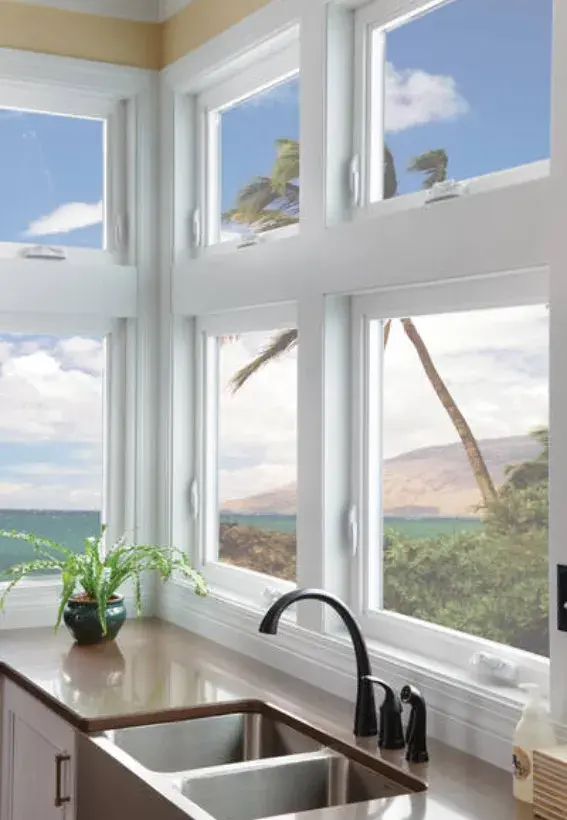
Best Windows for Coastal Homes in San Clemente
For San Clemente’s coastal environment, fiberglass frames outperform aluminum and wood. Low-E glass coating reduces UV and heat gain without affecting cleanability. Impact-rated laminated glass handles wind-borne sand. And whatever you install, what determines long-term performance more than the window itself is how consistently it gets cleaned with deionized water.
We’re not a window installer. But we clean windows in San Clemente five days a week, and we see what holds up and what doesn’t across every frame material, glass type, and coating in the city. Here’s what that experience tells us.
Call (949) 408-1235 if you have a window cleaning question rather than a replacement question.
Frame Materials — What Survives the Coastal Environment
Frame material is the most consequential choice for coastal San Clemente properties. The Pacific salt air that deposits on glass also contacts frames continuously — and what that salt does to aluminum, wood, and vinyl over years is significantly different.
Fiberglass
Best overall for coastal San Clemente. Fiberglass frames don’t corrode, don’t rot, don’t expand significantly with temperature fluctuation, and don’t react with sodium chloride. The frame surface is paintable and holds paint well in coastal conditions. Fiberglass doesn’t have the structural vulnerability of vinyl in high-UV environments — San Clemente’s 300 days of sunshine degrades some vinyl formulations faster than manufacturers’ estimates suggest, particularly on south and west-facing exposures. For bluff-top properties in Sea Pointe Estates, Cyprus Shore, or Southwest San Clemente where salt exposure is direct and continuous, fiberglass is the right call.
Aluminum
Common in San Clemente but requires attention. San Clemente’s Spanish Colonial architecture was built predominantly with aluminum-framed windows from the 1970s and 1980s. Aluminum conducts heat, has poor thermal performance, and is vulnerable to salt-induced oxidation in coastal positions. The white powder you see on aluminum window corners and joint connectors in coastal positions is aluminum oxide — the early stage of salt-accelerated oxidation that deepens into pitting over time. Aluminum frames require more frequent professional cleaning than fiberglass, and the oxidation runs onto the glass edge at the frame junction, creating staining that looks like hard water spots but originates from the frame.
Vinyl
Acceptable inland, mixed performance at coastal positions. Vinyl frames perform reasonably well in San Clemente’s inland neighborhoods — Talega, Forster Ranch, Rancho San Clemente — where salt exposure is lower. At bluff-front positions with direct coastal exposure, high-UV degradation is a real factor. The UV exposure that bakes calcium deposits into glass also affects some vinyl formulations, causing chalking and fading on south-facing frames faster than expected. Newer premium vinyl formulations with UV-stabilized compounds perform better. Ask the manufacturer for coastal UV certification data before installing vinyl at bluff-front positions.
Wood
Beautiful but high-maintenance at the coast. Traditional wood frames in San Clemente’s historic downtown properties and Ole Hanson-era homes have character that other materials don’t replicate. They’re also the most maintenance-intensive at coastal positions. Salt air accelerates wood fiber degradation, the marine layer moisture drives mold and mildew growth on inadequately sealed frames, and paint failure on wood frames in coastal conditions requires more frequent repainting than inland equivalents. If you’re maintaining original wood-framed windows in a historic San Clemente property, professional cleaning that addresses the frame surface carefully — avoiding high-pressure water near paint edges — is what extends the maintenance cycle.
Glass Types — What the Options Actually Do
Single pane
Still common in San Clemente’s older homes. Many downtown and North Beach-area properties have original single-pane glass. It has no thermal performance benefit, but the glass itself is thicker than early double-pane units, and some homeowners find it easier to clean than modern coated glass. Salt air affects single-pane glass the same way it affects all glass — the cleaning approach is the same.
Double-pane insulated glass units (IGU)
Standard in virtually all construction since the 1990s. The sealed air space between the two panes provides thermal insulation. The performance difference in San Clemente’s mild climate is less dramatic than in colder or hotter inland cities — but for west-facing glass dealing with direct Pacific afternoon sun, the thermal performance matters for comfort and cooling costs. The seal between the panes is the weak point. Failed IGU seals create condensation between the panes — a fogging effect you can’t clean because it’s between the glass layers. Coastal humidity and temperature cycling accelerate seal degradation. If you have fogged double-pane windows, professional cleaning won’t fix them — seal replacement or unit replacement is the answer.
Low-E glass
A metallic coating applied to one surface of the inner pane in an IGU. Reflects infrared radiation while allowing visible light through. On west-facing glass in San Clemente dealing with direct afternoon sun, a Low-E coating meaningfully reduces heat gain and UV transmission. It doesn’t significantly affect how the exterior glass surface accumulates salt and calcium — the exterior surface of an IGU is uncoated glass regardless of whether there’s a Low-E coating on the inner surface. Clean it the same way. The one cleaning consideration: Low-E coating on the interior surface of a visible pane can be damaged by ammonia-based products. Never use Windex on Low-E glass — it’s not a theoretical risk, it’s a real degradation pathway on repeated contact.
Laminated glass
Two layers of glass bonded to a plastic interlayer. The interlayer holds the glass together when broken — a safety feature relevant at bluff-top positions in Southwest San Clemente where Santa Ana wind events carry debris at high velocity. Impact-rated laminated glass is the right choice for large, unshielded west-facing openings at exposed coastal positions where Santa Ana winds carry debris at velocity. It’s heavier than standard glass and requires appropriately rated frame and hardware. The exterior surface cleans the same way as standard glass — the lamination is internal.
Coatings and Treatments — What’s Worth Considering
Hydrophobic glass coatings
Water-repellent treatments cause water to bead and roll off the glass surface rather than spread and evaporate in place. The appeal in San Clemente is obvious — if the irrigation water and marine layer moisture bead off rather than spread and dry, the mineral deposit mechanism is disrupted. In practice, hydrophobic coatings reduce the rate of surface contamination on clean glass but don’t eliminate it. Salt still deposits from airborne aerosol regardless of whether the water beads. The coatings require periodic reapplication (typically annually) and can be damaged by abrasive cleaning — which rules out any DIY scrubbing approach on treated glass.
UV-blocking film
Applied to the interior surface of the glass, reduces solar heat gain and UV transmission. Common on large west-facing picture windows in San Clemente where afternoon sun creates heat and UV fading on interior furnishings. The film has no effect on exterior contamination. It can be damaged by ammonia-based cleaning products and by abrasive scrubbers — a standard reason why professional deionized water cleaning is recommended over household cleaning products on any treated or coated glass surface.
Anti-reflective coatings
Less common in residential applications. Creates a clearer, less reflective surface — more relevant for architectural glass applications than standard residential windows. Sensitive to abrasive cleaning. If present, confirm with the glass manufacturer what cleaning approach is appropriate before any treatment.
The San Clemente Architecture Factor
San Clemente’s Spanish Colonial Revival architecture — established by founder Ole Hanson’s original vision in 1928 — creates specific window configuration patterns that matter for cleaning and maintenance.
Arched openings and decorative transoms
Historic homes in the downtown and Pier Bowl areas often have arched window openings with fixed glass in the arched upper section and operable sash below. The fixed arched section accumulates salt and marine layer film the same as any other glass, but the curved geometry makes certain cleaning approaches more effective than others. A water-fed pole with a flexible brush head navigates arched glass more cleanly than rigid squeegee approaches.
Tile roof adjacency
The clay tile rooflines that define Spanish Colonial architecture create specific access limitations. No ladder contact on clay tile without risk of cracking. The water-fed pole from the ground is the right approach for all glass adjacent to tile rooflines — relevant for both new construction and historic homes.
Large picture windows and view glass
Custom homes throughout Marblehead, Sea Pointe Estates, and Southwest San Clemente install large-format fixed glass panels to maximize ocean and Catalina Island views. These panels accumulate hard water calcium and salt film across a significant surface area. The scale of these panels means the quality difference between DI water and tap water cleaning is highly visible — a large hazy fixed panel reads very differently than a clear one from any angle in the home.
According to the U.S. Department of Energy, coastal and high-humidity environments are specific considerations in window selection, with frame material durability in humid salt air conditions a primary factor in long-term performance. The DOE guidance on window selection aligns with what we observe in practice on San Clemente properties.
The Maintenance Reality
Here’s the honest conclusion from five days a week on San Clemente properties: frame material and glass type matter for long-term durability and thermal performance. But the single biggest determinant of how a window looks and how long the glass surface lasts is the cleaning approach — specifically whether it uses deionized water or tap water.
A fiberglass-framed, Low-E double-pane window cleaned monthly with San Clemente’s 625 ppm tap water accumulates bonded calcium deposits faster than an older aluminum-framed single-pane window cleaned every 10 weeks with DI water at sub-5 TDS. The water quality determines the mineral accumulation rate. The frame and glass type determine structural durability. Both matter, but they operate on different timescales.
If you’re replacing windows on a coastal San Clemente property: choose fiberglass frames, Low-E glass on west and south-facing openings, impact-rated laminated glass for large exposed openings, and plan the ongoing maintenance schedule from day one. Residential window cleaning on a 10-week DI water schedule starting the day after installation prevents Stage 2 calcium bonding from ever developing on new glass.
If you’re not replacing windows, the right cleaning approach extends whatever you have significantly beyond what tap water cleaning or no cleaning produces.