
Post-Construction Window Cleaning in San Clemente, CA — Silicone, Stucco Haze & Paint Overspray Removed Right
Serving new builds in Talega · Marblehead · Coast District · Rancho San Clemente · and renovation projects throughout 92672 & 92673
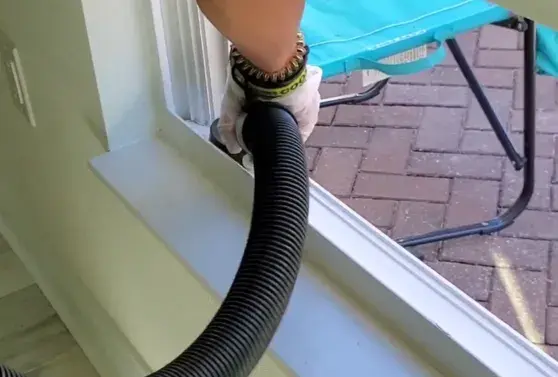
Construction Leaves a Specific Category of Mess on Glass — Standard Cleaning Doesn’t Touch It
A brand-new home in Talega or a custom build on The Crest in Marblehead comes off the construction timeline with glass that looks deceptively close to clean — until you get up close. Or until the afternoon sun hits it from the west.
What’s on those windows isn’t salt haze or hard water spotting. It’s silicone caulk overspray from the weatherproofing work. Stucco haze — the fine alkaline film that comes off Spanish Colonial exterior finishes and coats everything nearby. Paint particles from exterior spraying that baked onto the glass in San Clemente’s sun before anyone noticed. Cement and mortar dust that’s been sitting long enough to start bonding. Adhesive residue from the protective film that was supposed to protect the glass during construction but left its own sticky film behind.
None of this responds to the standard DI water scrub-and-rinse that handles regular residential cleaning. We walk onto construction sites in Talega and Marblehead regularly and see glass that the GC’s crew has tried to clean with a standard squeegee — the silicone smears, the stucco haze spreads, and the glass ends up worse than before they tried. These contamination types need specific removal techniques, specific chemistry in some cases, and in most situations, careful razor blade work. Done wrong, you scratch the glass on a brand-new $500K window installation — glass replacement on a custom San Clemente build runs $300–$1,200 per pane depending on size and specification. Done right, you deliver the clean glass the homeowner is expecting when they walk through on closing day.
Contractor or homeowner with a post-construction clean coming up? Call us, and we’ll tell you what’s on your glass and what it takes to get it off.
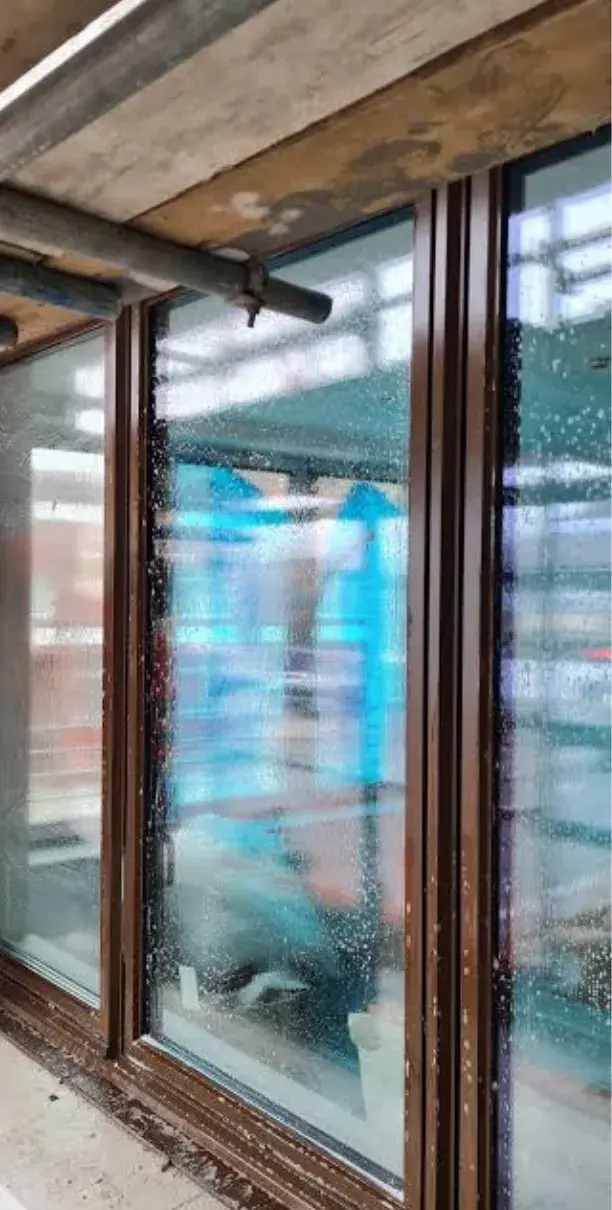
What San Clemente Construction Leaves on Glass — and Why It Needs a Specialist
San Clemente’s building environment creates a specific set of glass contamination issues that window cleaners who don’t work regularly on construction sites aren’t equipped to handle.
Silicone caulk overspray
Coastal construction in San Clemente uses silicone caulk extensively — everywhere a window frame meets stucco, everywhere a door frame meets a wall, everywhere the building envelope needs to be sealed against Pacific salt air and moisture. During application, silicone mist settles on glass. We see this on virtually every weatherproofed new build in San Clemente — the silicone haze is almost always there, concentrated on the windward elevation. Once it dries, it bonds to the surface and won’t come off with water or standard cleaning solution. It requires a silicone-specific removal agent applied correctly, followed by careful razor work on the softened residue, followed by a full DI water rinse. Skip any step, and you either leave silicone on the glass or you scratch it trying to force it off dry.
Stucco haze
San Clemente’s Spanish Colonial architectural identity means stucco is on almost every new and renovated building in the city — the white walls and terracotta tile roof look that defines the neighborhood from Avenida Del Mar to the bluffs in Sea Pointe Estates. Stucco application creates a fine alkaline dust and mist that settles on every glass surface within range of the work. Stucco haze looks like a pale grey-white film, thicker in some areas than others depending on where the stucco crew was working relative to the windows. On Talega new builds, we almost always find the heaviest haze on the courtyard-facing windows — that’s where the stucco crew works longest, and the overspray sits undisturbed by coastal breeze. It’s alkaline chemistry, which means it needs an appropriate cleaning solution — not standard soap, which is ineffective, and not acid-based cleaners without knowing what’s underneath it.
Paint overspray
Exterior painting on San Clemente properties often happens with spray equipment for efficiency and for coverage on Spanish Colonial textured stucco surfaces. Fine paint mist travels further than painters expect, especially with any coastal breeze running. It settles on glass, dries quickly in OC sun, and bonds. Fresh overspray within 24–48 hours of application can sometimes be removed with careful solvent work. Paint that’s been on the glass for weeks through a San Clemente summer is approaching permanent. Timing matters. We get calls from Marblehead homeowners who waited 4–6 weeks after exterior painting before booking the post-construction clean — that paint has baked through a full coastal cycle, and the removal is significantly harder.
Adhesive residue from protective film
Glass manufacturers ship new windows with a protective adhesive film on the surface. This film is supposed to protect the glass during construction and be removed before occupancy. In practice, the film often gets partially removed or removed too late — after sun and heat have activated the adhesive. What’s left behind is a sticky, dirt-attracting residue that standard cleaning smears rather than removes.
Cement and mortar dust
In new construction, concrete work for foundations, patios, and hardscaping throws alkaline dust across the entire site. It’s fine enough to land on glass surfaces, and if left through several marine layer mornings — the moisture, the drying, the baking — it begins to bond into something that needs physical removal, not just rinsing.
Tile grout haze
Many San Clemente homes have interior tile work throughout — terracotta and clay tile are common in coastal homes built to the Spanish Colonial aesthetic. During grouting, haze settles on nearby glass, particularly on patio doors and interior windows adjacent to tiled areas. Grout haze is alkaline and needs to be addressed before it fully cures.
Construction stickers and labels
Every new window pane comes with manufacturer labels and installation markings. These need to be removed cleanly, which requires the right solvent approach on the adhesive rather than just peeling and hoping.
Recognise what’s on your glass? Call us — we assess and quote before starting anything.
The Razor Blade Protocol — Why It Matters and Why It Has to Be Done Right
Most contamination on new construction glass requires razor blade work at some point in the removal process — silicone residue, stubborn paint overspray, adhesive residue, and bonded mineral crust all need a blade to clear once the softening chemistry has been applied. Done wrong, razor blade work scratches tempered glass permanently. This happens in one of three ways.
Running a razor blade across glass without adequate lubrication creates micro-scratches that are invisible individually but visible as a haze when light hits the glass at an angle. Every razor stroke on new construction glass is done with the glass wet — the blade floats on a film of cleaning solution rather than dragging across dry silica.
A blade that has been used on previous jobs, even once, can have micro-chips and irregularities that scratch glass. We use new single-edge razor blades. One job, one set of blades.
An abrasive approach. On Stage 1 glass, this can work — the mild abrasion physically scrubs off fresh deposits. On Stage 2 and above, the melamine foam abrades the glass surface directly without softening the hardened deposits first — dragging mineral particles across the glass and creating micro-scratches that become visible as additional haze when light hits them at an angle.
The correct sequence on every post-construction pane: apply the appropriate chemistry for the specific contamination type, allow it to work on the surface (typically 3–8 minutes depending on contamination age), agitate with the wet razor blade using consistent angle and pressure, rinse thoroughly with DI water, inspect under a raking light source. If it’s not clean, we go again. If it can’t be cleared, we tell the client what’s on the glass and why before we invoice.
New Build Areas in San Clemente We Work In Regularly
Renovation projects throughout San Clemente
Full exterior renovations — new stucco, new paint, window replacements — on existing homes throughout the city create the same contamination profile as new construction, sometimes concentrated on specific elevations of the home depending on where the work happened. Whole-house renovation cleans in the historic pier area neighborhoods often involve navigating original single-pane glass that needs more care than modern tempered glass.
Working on a project in any of these areas? Call us — we’re on site in San Clemente regularly.
Working With General Contractors in San Clemente
Post-construction window cleaning is timeline work. The cleaning needs to happen after the bulk of interior work is done but before the final walk-through, the CO inspection, and the owner’s possession date. In a market where construction timelines slip, we understand that the window cleaning schedule can shift — and we build flexibility into how we work with GC accounts.
What contractors need from us?
A vendor who shows up when the site is ready, not when it’s convenient for us. Insurance documentation for the job site — we carry full general liability and can provide a certificate before you put us on the schedule. Before/after photo documentation of every pane for punch list records. Honest assessment of glass that has damage we didn’t cause — fabricating debris, cracks, installation damage — documented separately from the cleaning scope.
What we need from contractors?
A 48-hour heads-up when the site is ready for glass work. Access coordination for gated construction sites in Talega, Marblehead, and the Coast District. Clear communication if the timeline moves — we’ll move with it.
If you’re a GC active in San Clemente and you need a reliable post-construction window cleaning vendor on your sub roster, call (949) 408-1235. For most punch list cleans in SC, we can schedule within the week.
Post-Construction Window Cleaning — Our Process
Step 1 — Site Assessment Before Any Chemical or Blade Work
We walk the site before touching anything. Every window gets a visual inspection — what contamination type is present, how long it appears to have been on the glass, whether there are any signs of fabricating debris or pre-existing damage in the glass itself.
This assessment determines the removal sequence for each pane. Silicone gets different chemistry than stucco haze. Paint overspray that’s two days old gets handled differently than paint that’s been baking in San Clemente sun for three weeks. Getting the chemistry right before applying anything prevents the kind of damage that can result from using an aggressive solvent on the wrong contamination type.
Call (949) 408-1235 — site assessment is part of every job, no charge.
Step 2 — Contamination-Specific Removal
Silicone overspray
Silicone removal agent applied to the affected area, time to work on the surface, wet razor blade work at a consistent angle, DI water rinse. Repeat if residue remains.
Stucco haze
Alkaline-appropriate cleaning solution applied across the full pane, light working-in with a soft brush or applicator, wet razor for any areas where the haze has bonded more aggressively, full DI water rinse.
Paint overspray
Assessment of paint type and set time first. Appropriate solvent or remover applied, dwell, wet razor work. For older, more set paint, multiple passes may be needed.
Cement and mortar dust
Calcium dissolver applied to bonded mineral areas, time to soften the crust, wet razor work, thorough DI water rinse. The dissolver chemistry also addresses any hard water mineral buildup that accumulated during the build.
Adhesive residue
Solvent application, dwell, gentle mechanical removal. The goal is clean glass without solvent residue — the DI water final rinse handles that.
Questions about what we’d use on your glass? Call (949) 408-1235 — we explain every step before we start.
Step 3 — Full DI Water Final Clean on Every Pane
After all contamination removal is complete, every pane gets a full deionized water scrub-and-rinse. This removes any remaining chemical residue from the cleaning agents, any loosened particles from the razor work, and any construction dust that settled during the process. It also addresses the standard salt air and marine layer deposits that accumulated during the build period.
The DI water final clean is what makes the glass look finished rather than just cleaned — no chemical streaks, no residue halos, no mineral film.
DI water on every pane after every treatment. Call (949) 408-1235 to book.
Step 4 — Raking Light Inspection
Every pane gets a final inspection under a raking light source — a light held at a low angle to the glass surface that reveals any remaining contamination or streaking that’s invisible under normal lighting conditions. This is how construction sites get sign-off quality, not just “looks clean in the room” quality. If anything doesn’t pass the raking light check, we go back and address it.
We don’t invoice until the glass passes raking light. Call (949) 408-1235.
Step 5 — Before/After Documentation and Pane Log
We photograph the completed job and document any panes where pre-existing conditions — fabricating debris, cracks, installation damage — were present before we started. This protects the contractor, the homeowner, and us. A documented pre-existing scratch is not our scratch. Photo documentation is sent to whoever is managing the punch list — the GC, the homeowner, or both.
Ready to book? Call (949) 408-1235 — contractor or homeowner, we work to your schedule.
Post-Construction Window Cleaning Pricing in San Clemente
Post-construction cleaning is priced per job rather than on the standard residential rate schedule because the scope varies significantly depending on contamination type, set time, glass count, and access requirements.
Services | Pricing Structure |
Standard post-construction clean | Light contamination — sticker removal, light dust, construction film. Starting at $250–$450 for a typical San Clemente single-story new build. |
Full post-construction clean | Silicone, stucco haze, or paint overspray removal. Starting at $400–$800 depending on scope and glass count. Heavily contaminated panes or large glass areas (floor-to-ceiling panels, architectural glass) are quoted after site assessment. |
Renovation cleans | Partial house, specific elevations affected by stucco or paint work. Quoted by elevation and contamination scope after a brief walkthrough or photo assessment. |
GC accounts with recurring new build punch list work | Volume pricing available. Call (949) 408-1235 to discuss. |
All post-construction quotes include the assessment step at no charge. We look at the site first, tell you what we’re dealing with and what it’ll cost, and you decide before we start.
What Homeowners and Contractors Say
Same situation? Call (949) 408-1235 — we’ll assess your glass and tell you what we’re dealing with before we start.
Book Post-Construction Window Cleaning in San Clemente
Homeowners: If your new build or renovation is approaching the final walkthrough and the glass needs addressing, call (949) 408-1235. Tell us the address, what trade work has been done near the glass (stucco, paint, caulking, tile), and roughly when the site will be ready. We’ll schedule the clean to fit your possession timeline.
General contractors: Call (949) 408-1235 with the site address and your punch list timing. We work to your schedule, not ours. Insurance certificates, before/after documentation, and flexible access coordination are standard.
Step 1. Call us at (949) 408-1235
Tell us the site address, contamination type if known, and timing.
STEP 2. Get A Quote
We assess the site and quote — in person for larger jobs, by phone for standard scope.
STEP 3. On-time Arrival
We come in at the right point in your construction sequence.
Step 4. Cleaning Process
Full contamination removal, DI water final clean, raking light inspection, photo documentation.
Step 5. Client Satisfaction
Glass is sign-off ready. Before/after photos sent.

Frequently Asked Questions — Post-Construction Window Cleaning San Clemente
Still have a question not answered here?
Call us (949) 408-1235 — real person, no hold queue, during business hours.