
Window Screen Cleaning & Rescreening in San Clemente, CA — Salt Corrosion, Torn Mesh & Pet Damage Fixed
Serving homes in Talega · Forster Ranch · Sea Pointe Estates · Cyprus Shore · Marblehead · the Pier Bowl · Rancho San Clemente
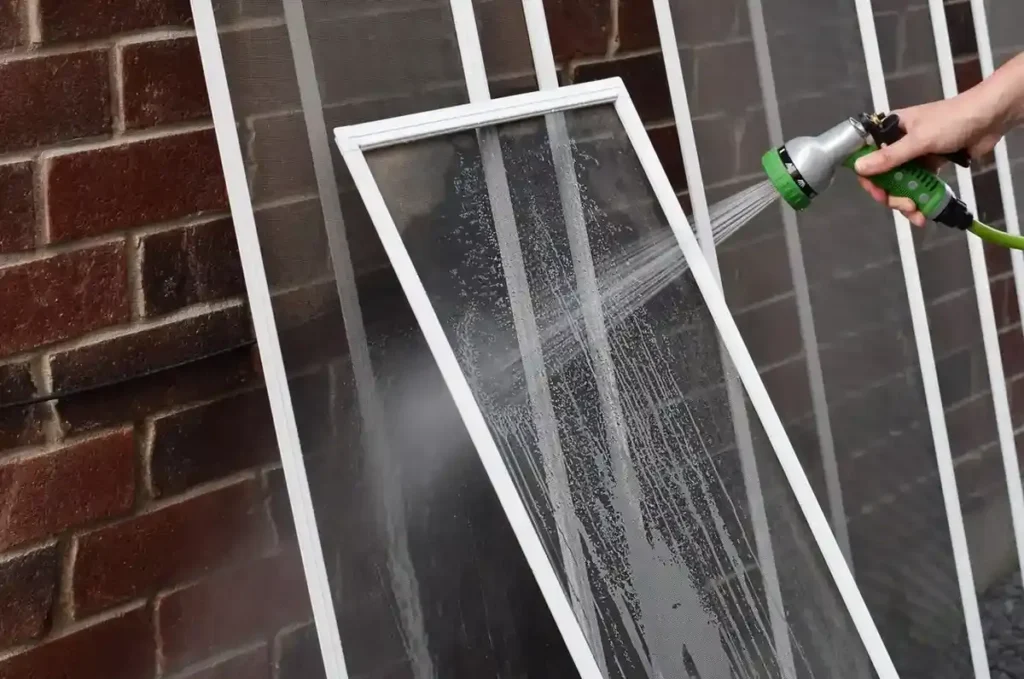
Dirty Screens Are Why Your Clean Windows Look Dirty Again Within a Week
Most homeowners don’t connect the two things. The window cleaner comes, the glass looks great. Three weeks later, it looks hazy again. The assumption is that the cleaning didn’t hold up. Usually the screen is the problem.
When a screen has salt, dust, and coastal debris embedded in its mesh — which most San Clemente screens do within weeks of the last clean — every coastal breeze that pushes through it transfers that debris directly onto the glass face it’s protecting. The glass gets cleaned, the screen stays dirty, and the screen puts the dirt right back.
This is why we clean screens on every full-service window cleaning visit. Not as an upsell because leaving dirty screens on clean glass defeats the exterior clean within days.
But cleaning can only do so much. When the mesh is torn, when the aluminum frame has corroded to the point of structural failure, when the spline has dried out, and the mesh has lost its tension — cleaning doesn’t fix any of that. That’s where rescreening and frame replacement come in.
Not sure if your screens need cleaning, rescreening, or full replacement? Call us. We’ll tell you which in 60 seconds.
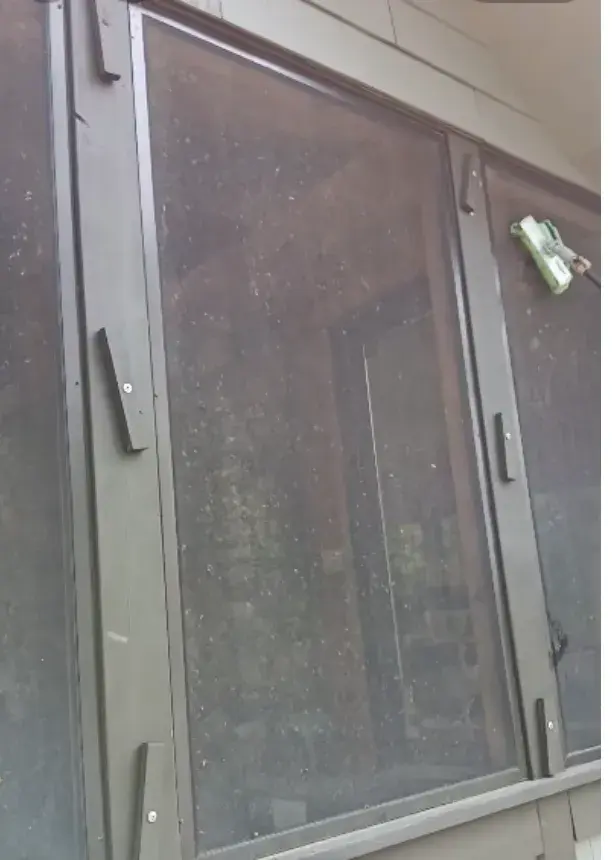
What the Coast Does to Window Screens in San Clemente
San Clemente’s coastal environment attacks window screens differently depending on how close to the water a property is, but every screen in 92672 and 92673 deals with some version of this.
Salt corrosion on aluminum frames
Most window screens in San Clemente have aluminum frames. Aluminum holds up well inland. On the coast, salt air oxidises the aluminum surface progressively.
Stage 1
White oxidation powder on the frame surface. The aluminum surface has reacted with salt and moisture to form aluminum oxide — the white chalky film you see on older screens throughout coastal SC neighborhoods. This stage is cosmetic. The frame is still structurally sound. Cleaning removes the powder and slows further progression. The screen is worth keeping.
Stage 2
Pitting on the frame surface. Salt has penetrated the oxide layer and started eating into the aluminum itself. The frame surface has small pits and irregular texture. Still structurally reusable in most cases — but the pitting accelerates further corrosion because it creates more surface area for salt to attack. If the frame is still square and rigid, rescreening with new mesh can give it several more years of useful life.
Stage 3
Corner cracking and frame splitting. The corners where frame sections join are the first structural failure point. When salt has worked into the corner brackets, and the aluminum has corroded through, the frame loses its squareness and starts splitting. A screen at this stage won’t hold new mesh under proper tension. The frame needs replacing, not just rescreening.
Mesh degradation in coastal humidity
Fibreglass mesh — the most common type in San Clemente homes — is significantly more corrosion-resistant than aluminum mesh. But fibreglass has its own coastal degradation mode: UV exposure on south and west-facing screens, combined with the salt mineral content that accumulates in the mesh fibres over time, causes fibreglass mesh to go stiff and brittle. Instead of flexing when touched, it cracks. The mesh starts with small cracks at stress points — typically corners — and progresses to larger tears. At this stage, no amount of cleaning restores the screen. It needs new mesh.
Aluminum mesh corrodes faster than fibreglass in salt air. On ocean-facing properties in Cyprus Shore, Cotton’s Point, and Sea Pointe Estates, aluminum mesh can show significant salt-driven deterioration within 2–3 years. For these properties, we recommend fibreglass mesh on rescreening.
Pet damage
San Clemente is a dog-friendly city. The coastal walking trails, T-Street beach, Shorecliffs, and the neighbourhood parks in Talega and Forster Ranch mean most households have at least one dog. Dogs push against window screens to see what’s happening outside. Large dogs in particular push hard enough to pop the mesh out of the spline groove, or push the frame out of square, or punch through lightweight mesh with repeated pressure.
Cats climb screens. The puncture pattern from cat claws through mesh fibres creates a specific type of damage that starts as a few small holes and spreads as the surrounding mesh fibres weaken.
Pet-damaged screens — mesh pushed out of the spline groove, corners bent, individual punctures in the mesh — are the second most common screen repair situation we deal with in San Clemente after coastal corrosion. Most pet damage is repairable with rescreening using heavier-grade fibreglass or pet-resistant mesh, without needing to replace the frame.
Santa Ana wind damage
October through December, and occasionally in March, Santa Ana winds push offshore with enough force to rattle unsecured screens against their frames and flex the mesh repeatedly. Screens that are already compromised — older mesh, loose spline, corroded frame corners — can come through a significant Santa Ana event with bent frames, mesh blown partially out of the spline groove, or small tears at the corners where the spline pressure is highest. We get a consistent run of screen repair calls in November and December after major Santa Ana events in San Clemente.
Bent frames from other window cleaners’ ladders
This one comes up more than it should. Window cleaners who use conventional ladders against the wall of a two-story home can contact screen frames with ladder side rails or feet when repositioning. A ladder side rail pushed against a screen frame bends the frame at the contact point. Aluminum at Stage 2 corrosion will crack rather than just bend. Bent frames from ladder contact are fixable in some cases by careful straightening, but cracked frames at the bend point need replacing.
Not sure what your screens need?
Take a photo and call us, and we’ll tell you whether it’s a clean, a rescreen, or a full replacement, and what it’ll cost.
The Three-Service Decision — Cleaning, Rescreening, or Frame Replacement
Understanding which service applies to your screens before we arrive means no surprises on the day. Not sure which one applies? Call (949) 408-1235 — we’ll tell you in 60 seconds.
Service 1 — Screen Cleaning
What it is: Removing embedded salt, dust, mineral deposits, organic debris, and coastal buildup from the mesh and frame using the appropriate method for the screen’s condition.
Three methods depending on what the screen needs:
Dry Brush
For screens that are lightly dusty — not heavily soiled, no visible salt buildup. A dry brush-down removes loose surface debris without introducing moisture that can make light dust worse rather than better. Fast, effective for screens that don’t need more.
Wet mop applicator
For screens with bonded salt and mineral deposits embedded in the mesh. The applicator with a mild cleaning solution works through the mesh fibres to break up the mineral bonding. The screen is rinsed and left to dry. Standard method for most coastal San Clemente screens on a regular cleaning schedule.
Screen cleaner solution:
For screens with heavy buildup — mineral crust, organic matter embedded deep in the mesh, or screens that haven’t been cleaned in multiple seasons. Specialist screen cleaning solution works on the specific chemistry of the contamination. Takes longer but addresses what a standard wet mop misses.
What cleaning doesn’t fix?
Torn mesh, bent frames, popped splines, corroded corners, pet punctures. These need rescreening or replacement.
When cleaning is the right call
The frame is sound, the mesh is intact, the spline is seated, and the screen sits flush in the window opening. The problem is accumulated coastal dirt. Cleaning solves it.
Service 2 — Rescreening (New Mesh in Existing Frame)
What it is: Removing old mesh from the frame, cutting new mesh to size, rolling it into the frame channel using a spline roller, seating new spline rubber to lock the mesh in tension, trimming the excess. The original frame is retained.
When rescreening is the right call: The frame is structurally sound — square, no cracking at corners, no bending that compromises squareness. But the mesh is torn, brittle, pet-damaged, or has reached the end of its coastal service life. Rescreening gives the frame a full service life extension with new mesh at significantly less cost than a full frame replacement.
Mesh options for rescreening in San Clemente
Standard fibreglass (charcoal or grey)
Most coastal homes in San Clemente. Corrosion-resistant, flexible, good visibility through the mesh. 18×16 mesh count (18 strands horizontal, 16 vertical per inch) is the standard for residential windows.
Solar/sunscreen mesh
Higher density mesh that reduces solar heat gain — relevant for south and west-facing windows in Talega and Forster Ranch where afternoon sun through glass is a factor. Reduces light and visibility more than standard mesh.
Pet-resistant fibreglass
Heavier-gauge fibreglass with a tighter weave — significantly more resistant to pet pushing and claw punctures. Recommended for households with large dogs or cats that interact with screens regularly. Common request in Forster Ranch and Talega where family homes have dogs.
Aluminium mesh
Not recommended for coastal San Clemente properties facing west, south, or ocean-direction. Aluminium mesh corrodes in salt air. For inland-facing windows on properties in Rancho San Clemente or the Canyon side of Marblehead, aluminium mesh performs reasonably well and costs slightly less.
Spline
The rubber groove seal that holds the mesh in the frame channel. Old spline hardens and shrinks over time — in coastal humidity it can crack. We replace spline with every rescreen as standard. Reusing old spline on new mesh compromises mesh tension.
What rescreening costs
Starting from $25–$45 per screen depending on screen size and mesh type. Most San Clemente standard residential screens run $30–$40 each. Discounts apply for multiple screens done at the same visit.
Service 3 — Full Frame Replacement
What it is: Complete replacement of the frame and mesh with a new screen unit matched to the window opening dimensions.
When full replacement is the right call
The frame is at Stage 3 corrosion — corners cracked or splitting, frame lost its squareness, structural integrity gone. Or the frame was bent by ladder contact and the bend has cracked the aluminum. Or the frame dimensions have changed because the window opening has shifted slightly in older pier-area homes where historical settling has altered frame tolerances.
Custom sizing for San Clemente’s older homes
The historic Ole Hanson-era homes near the pier and downtown San Clemente — built in the 1920s and 1930s — often have non-standard window dimensions that don’t match modern off-the-shelf screen sizes. We cut and frame screens to the exact opening dimensions rather than retrofitting a standard size. A screen that doesn’t fit the opening sits loosely, lets in insects and debris around the gap, and falls out more easily in Santa Ana winds.
What full-frame replacement costs
Starting from $45–$80 per screen including frame, mesh, spline, and installation. Larger or non-standard sizes quoted individually. Call (949) 408-1235 with the window dimensions or we’ll measure on-site.
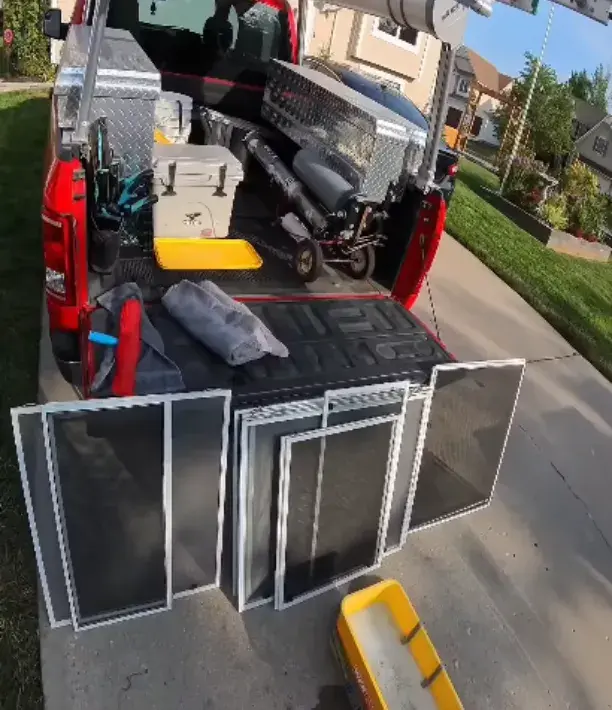
Screen Cleaning Included on Every Full Window Cleaning Visit — Here’s Why
We made the decision early on that screens are part of the job on full-service visits. Not a line item. Not a discussion.
The reason is practical: a screen left dirty on a clean window undoes the exterior clean within days. The coastal breeze that moves through San Clemente from the Pacific — constant, persistent, salt-laden — pushes whatever is embedded in the screen mesh directly onto the glass face behind it. The glass gets a ghost pattern of the mesh debris within a week of the clean.
Keeping dirty screens on cleaned glass is like mopping a floor and leaving muddy shoe mats at every doorway. The floor is clean for about twenty minutes.
Screens included on full-service visits means you’re not managing a separate screen cleaning schedule. The screens stay clean at the same cadence as the glass, which is the only approach that makes the window clean last.
What’s separately charged
Rescreening and frame replacement. These are distinct services beyond the scope of a cleaning visit — new materials, more time, specific skills. If we find screens that need rescreening or replacement during a cleaning visit, we’ll tell you on the day, quote the additional work, and schedule it either immediately or on a follow-up visit. We don’t add it to the bill without telling you first.
Want screens included in your next window clean?
How We Assess Screens Before Every Visit
Before any screen gets cleaned or pulled from the frame, we look at it. That’s not a formality — that’s how you decide what method to use and whether cleaning is even the right answer.
Quick visual on-frame check
Is the mesh intact? Does the spline appear seated? Is the frame square? Is there visible corrosion damage at the corners?
Off-frame check for screens coming down for cleaning
Once we pull a screen, we check the corner brackets for cracking and the frame channels for corrosion staging. We check the spline condition. We look at the mesh under raking light to catch small tears that aren’t visible from a distance.
What we tell you
If a screen needs rescreening, we tell you before pulling it off and cleaning it. Cleaning a screen that needs rescreening is a waste of your money — the mesh tears aren’t going to close up after a clean. We assess first, then act.
Call us for an honest assessment, no unnecessary work, no surprises on the invoice.
Screen Pricing in San Clemente
Property Details | Pricing Structure |
Screen cleaning | It is included in full-service window cleaning visits, so no additional charge. |
Screen cleaning only | Standalone, no window cleaning. Starting from $8–$15 per screen, minimum visit charge of $75. Quoted by total screen count. |
Rescreening (new mesh in existing frame) | Starting from $25–$45 per screen for standard residential size. Pet-resistant mesh and solar mesh are priced slightly higher. Multiple-screen discounts apply. |
Full frame replacement (new frame + mesh) | Starting from $45–$80 per screen for standard residential dimensions. Non-standard and custom sizes quoted on measurement. |
Combined window clean + rescreening visit | Most efficient approach for screens that need both services. Quoted together — typically the cleaning rate for windows plus the rescreening rate for affected screens. |
Call us with your window count and a rough sense of screen condition, and we’ll give you a quote in 2 minutes.
What San Clemente Homeowners Say
Ready to sort your screens? Call (949) 408-1235 — we’ll tell you what each screen needs in 60 seconds.
Book Screen Cleaning or Rescreening in San Clemente
If you’re booking a full window cleaning visit: Screen cleaning is included. Just book the window clean, and we’ll handle the screens as part of it. If we find screens that need rescreening, we’ll tell you on the day and quote it before doing anything.
If you need rescreening or screen replacement only — no window cleaning:
Step 1. Call us at (949) 408-1235
Tell us your address and roughly how many screens and what condition they’re in — torn mesh, corroded frames, pet damage, or you’re not sure.
STEP 2. Get A Free Estimate
We quote by phone for standard screens or assess on-site for a more complex scope. On-site assessment is included in the visit with no separate charge.
STEP 3. Confirm Schedule
We schedule the rescreening or replacement at a time that works. Most screen jobs in San Clemente are completed in a single visit.
Step 4. Pay after 100% satisfaction
New mesh, new spline, screens sitting flush and clean. We walk through the job with you before we leave.

Frequently Asked Questions — Screen Cleaning & Rescreening San Clemente
Still have a question not answered here?
Call us (949) 408-1235 — real person, no hold queue, during business hours.