
Exterior Window Cleaning in San Clemente, CA — Pure Water System, No Ladder on Your Patio Cover
Serving homes and businesses in Talega · Forster Ranch · Sea Pointe Estates · Cyprus Shore · Marblehead · the Pier Bowl · Rancho San Clemente
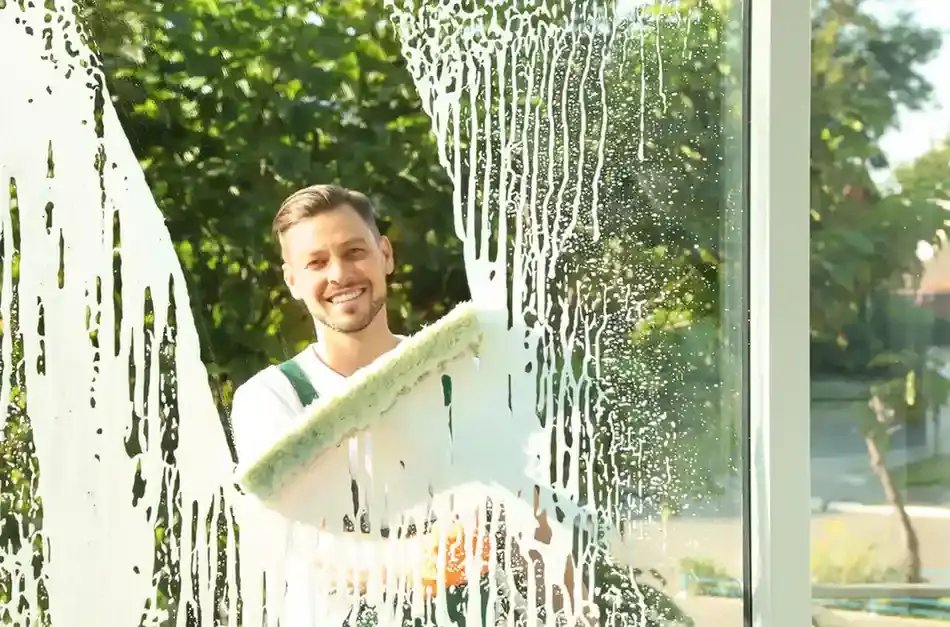
Exterior-Only Cleaning — Available as a Standalone Service
Not every homeowner wants the inside done every visit. Some properties only need exterior cleaning on a regular basis and interior cleaning once or twice a year. That’s a completely normal approach — the exterior faces the coast, the weather, the salt air. It accumulates faster and needs more frequent attention than interior glass.
We do exterior-only visits. No requirement to book interior at the same time. If you want exterior maintained on a 6-week or 8-week schedule and interior done once a season, we set that up. If you want exterior only indefinitely, that’s the schedule.
What doesn’t change whether it’s exterior only or full service: the pure deionized water system, the water-fed pole for upper floors, and the frames-and-sills-included standard. Those are the baseline on every exterior job regardless of scope.
Want exterior-only on a recurring schedule? Call us, and we’ll set up the right interval for your property in one call.
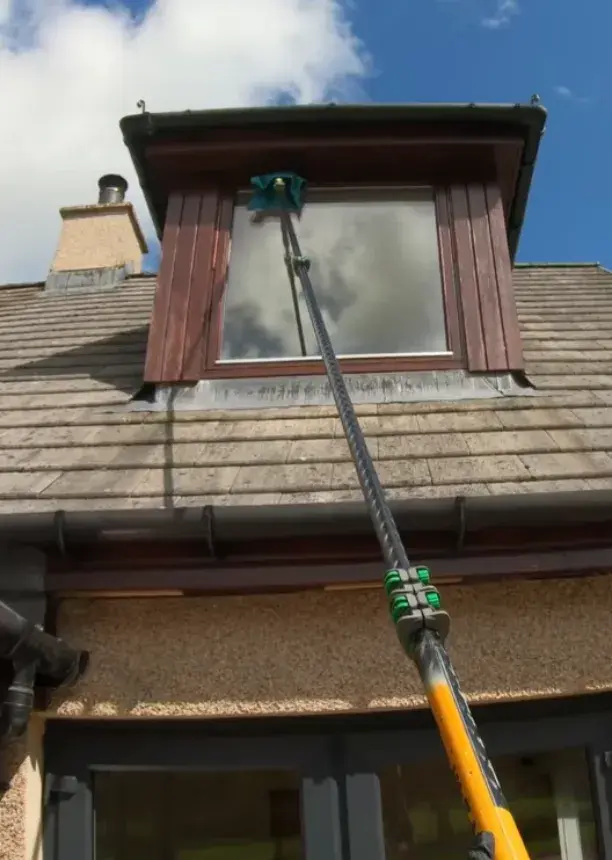
What’s Actually on the Outside of Your Windows in San Clemente
Exterior glass in San Clemente is fighting a combination of things that most inland homeowners never deal with. Some of this is familiar from what we cover on other pages. But here, on the page specifically about exterior cleaning, it’s worth being specific about what we’re actually removing on every visit — because the exterior glass surface is the one that takes everything the coast throws at it.
Salt haze and mineral film from the Pacific
Airborne salt particles from the ocean settle on exterior glass and bond with moisture — particularly during June Gloom mornings from late May through early July when the marine layer rolls in nightly and burns off mid-morning. This leaves a progressively thickening mineral-salt film on exterior glass that scatters light and creates the characteristic coastal haze. On bluff-top homes in Sea Pointe Estates and Cyprus Shore, this cycle happens every day. On inland properties in Talega and Rancho San Clemente, it’s slower but still consistent.
Hard water calcium from irrigation systems
Most San Clemente properties have irrigation systems cycling in the pre-dawn hours. OC water runs at 400–600 TDS. When irrigation spray contacts exterior glass — which it does on the lower panes of most Talega and Forster Ranch homes — the mineral load dries in morning sun and leaves calcium carbonate deposits. Over weeks, these progress from a soft white film to a mineral crust that requires more than a standard clean to remove.
Bird droppings
This is one of the most mentioned exterior cleaning complaints in San Clemente, and it’s worth addressing directly. The coastal bird population — Western gulls from the beaches, Brandt’s cormorants and Pelagic cormorants that nest on the bluffs near Cotton’s Point and Cyprus Shore, pigeons around the pier, house finches and sparrows throughout the residential neighbourhoods — leaves droppings on exterior glass regularly. On homes near the waterline in Southwest San Clemente and the pier area, it’s not occasional. It’s frequent. Bird droppings are acidic — uric acid in the droppings starts etching glass if left for extended periods under San Clemente sun. The longer they sit, the harder they are to remove cleanly.
Spider webs and web debris in frame corners
Coastal moisture creates ideal conditions for spiders, and San Clemente’s combination of year-round mild temperatures and coastal humidity means exterior frames accumulate spider webs in corners, channels, and along the top frame edges consistently. Webs themselves aren’t hard to remove. The debris they catch — dust, insects, salt particles, coastal organic matter — embeds into frame channels and runs down onto the glass below when wet. Cleaning the corners and channels is part of removing the source, not just the symptom.
Gutter drip lines on glass below
Homes with gutters — which includes most properties in Talega, Forster Ranch, and Marblehead — can develop tannin staining and mineral streaking on exterior glass directly below gutter outflows. When gutters overflow or drip between cleanings, the water carries dissolved minerals and organic tannins from leaf debris and runs down the exterior wall onto the glass face. These vertical stain lines need targeted treatment during exterior cleaning — they don’t respond to a standard rinse.
Screen debris transfer onto exterior glass
When dirty screens are in place on exterior windows, coastal breezes push debris from the screen mesh directly onto the glass face on the other side. Salt, dust, pollen, and organic matter embedded in the screen mesh press against the glass and leave a ghost pattern of the mesh on the exterior pane. This is one of the reasons we clean screens as part of every full-service visit — leaving dirty screens on cleaned glass defeats the exterior clean within a week.
Construction debris on new builds and renovations
On properties near active construction in Talega, Marblehead, or the Coast District, airborne construction dust settles on exterior glass of neighbouring properties. Stucco dust, concrete particles, and paint mist carried by coastal breezes coat exterior glass the same way construction contamination affects the building under construction. Neighbouring property owners in active construction zones sometimes notice their exterior glass fouling faster than usual for this reason.
Describe what you’re seeing on your glass — call us, and we’ll tell you exactly which of these is your primary problem.
The Pure Water System — Why Every Exterior Clean Starts Here
The water-fed pole system used for exterior cleaning isn’t just a delivery mechanism for regular tap water. The water running through it is deionized — stripped of dissolved minerals through an ion exchange treatment system in our truck. Here’s why this matters specifically for exterior glass.
OC tap water at 400–600 TDS carries significant dissolved mineral content. When tap water is applied to exterior glass and dries — which on a warm San Clemente day with any coastal breeze takes minutes — the minerals stay behind as a film on the glass surface. It’s invisible while wet. Visible as spotting or haze once dry. Every exterior clean using tap water deposits a fresh layer of mineral residue on the glass. The visible dirt gets removed, but the mineral load from the cleaning water gets added back.
Deionized water below 10 TDS carries essentially no dissolved minerals. When it dries on exterior glass — which takes roughly 15–20 minutes in moderate San Clemente temperatures, longer on cooler June Gloom mornings, shorter in afternoon heat — it leaves nothing behind. The glass dries completely clear.
We check the TDS reading on the output water from our truck system before every exterior job. If it reads above 10, we don’t start. We run below 5 TDS on every job — that’s the standard we hold.
This is why our exterior cleans hold up longer than what most homeowners have experienced with other operators. The water isn’t reintroducing what the coast is already depositing.
The Water-Fed Pole — How We Clean Second and Third Story Exterior Glass Without Touching Your Roof or Patio Cover
This is the section homeowners ask about most before booking exterior cleaning for the first time. The standard approach to second-story exterior window cleaning is a ladder. Ladder against the wall, operator climbs up, cleans the glass from the ladder, moves the ladder, repeats. On a home with a standard exterior wall, this works acceptably — though the ladder does leave marks and creates access complications around landscaping and planted areas. In San Clemente, the standard approach creates specific problems.
The vast majority of two-story homes in Forster Ranch’s Reserves and surrounding communities have aluminum patio covers extending from the rear exterior wall. The second-story windows above these covers are the ones that collect the most marine layer deposits and need the most frequent attention — and they’re exactly the windows that are hardest to reach without putting a ladder on the aluminum cover. Aluminum patio covers are not designed for ladder weight. A ladder leg on a patio cover panel causes denting that requires panel replacement. We’ve seen it happen on jobs done by other operators before us.
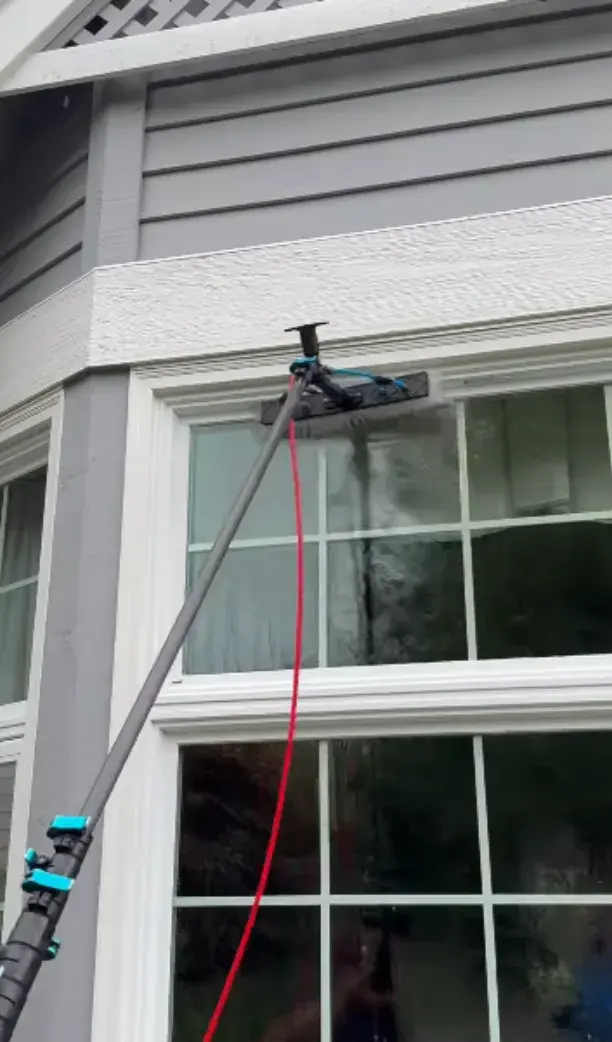
Our water-fed carbon fibre pole reaches up to 50 feet from the ground — that’s four to five stories of glass accessible without a ladder against the building. The DI water runs through the hollow core of the pole, out through a brush head at the tip. The brush head scrubs the glass surface and the frame perimeter, then the DI water rinses the loosened contamination down and off the glass. The glass dries spot-free from the ground. It reaches the upper windows on a Marblehead Crest property without anything against the clay tile. It works on a sloped driveway because the operator stays on the ground.
San Clemente’s Spanish Colonial aesthetic means clay tile rooflines are on a significant percentage of residential properties in the city — including many Marblehead custom homes, properties in Rancho San Clemente, and older homes near the pier. Clay tile is brittle under point-load pressure. A ladder foot placed on a clay tile to reach upper windows cracks tiles. Replacing a section of clay tile roofing costs significantly more than a window cleaning visit.
Ridge-positioned homes in Marblehead’s Crest section and throughout the Coast District — Eagles Ridge, Sea Coast Estates, the Harbour Light communities — sit on sloped lots where the driveway pitches significantly. Setting a conventional ladder safely on a sloped driveway surface requires specific ladder levelling equipment that most operators don’t carry.
A recessed window in an architectural detail, a third-story window with a specific access problem — we discuss it before the job, not on the day. We tell you what we can and can’t reach with the pole system, what will require a ladder and how we’d set it safely, and you make the decision about how to proceed.
Call now, and we’ll tell you what schedule your storefront/office needs and what the DI water difference looks like in practice.
Exterior Cleaning Frequency by San Clemente Zone — What Actually Holds Up
Different parts of San Clemente accumulate exterior glass contamination at different rates. These intervals are based on what we actually see on recurring accounts in each zone — not generic coastal recommendations.
Southwest San Clemente — Cyprus Shore, Cyprus Cove, Cotton’s Point (92672)
Direct Pacific exposure. Ocean-facing exterior glass on bluff-top and near-waterline properties: every 5–7 weeks. Salt and marine layer deposit cycles here are the most aggressive in the city. A six-week recurring clean is the minimum to keep ocean-facing glass from developing haze visible from inside the home.
Sea Pointe Estates and North San Clemente bluffs (92672)
Guard-gated bluff-top community. Panoramic ocean exposure. Exterior glass at this elevation: every 6–8 weeks. The elevation increases wind-driven salt particle deposition compared to street-level properties. Views of Dana Point Harbor and Catalina Island from these properties need clear glass to be worth anything.
Downtown San Clemente and Pier Bowl (92672)
Historic pier area, Avenida Del Mar corridor, Casa Romantica area. Higher bird activity near the waterfront than inland neighbourhoods. Exterior glass: every 6–10 weeks depending on bird exposure and proximity to water. Vacation rental properties in this zone need exterior cleaning timed to booking calendar turnovers.
Marblehead and Coast District (92672)
Hillside positioning, dual coastal-canyon exposure. West-facing exterior glass collects marine layer salt. East-facing exterior glass collects canyon dust and Santa Ana deposits. Every 8–10 weeks covers both exposure directions in most Marblehead properties.
Forster Ranch and Talega (92673)
Inland from the immediate coast but still in the salt air corridor. Irrigation hard water is the primary exterior glass problem here rather than marine layer salt — which means lower panes typically look worse than upper panes (opposite of bluff-top homes). Every 10–12 weeks, though Talega properties with aggressive irrigation coverage can run 8–10 weeks on the ground floor.
Rancho San Clemente (92672)
Canyon-adjacent. Less direct coastal exposure, more foothill dust and pollen. Exterior glass: every 10–14 weeks. Higher organic debris content in screens and tracks than coastal-zone properties.
What We Clean on Exterior Visits — Every Element, Not Just the Glass
Exterior window cleaning that addresses only the glass pane and nothing around it is the reason San Clemente homeowners have been frustrated by previous cleaners. The glass looks clean for a week and then appears hazy again. The source of the re-contamination — the frames, the channels, the sills, the cobwebs in corners — was never addressed.
What We Clean? | Description |
Glass pane | Brush scrub with the water-fed pole head, full DI water rinse, top to bottom on each pane. The brush head covers both the glass face and the frame perimeter in each pass. |
Frames | Exterior window frames accumulate salt, dust, spider web debris, and in some cases mould from coastal moisture. A dirty frame channels contaminated water down onto the glass every time rain or irrigation spray runs down the wall. We wipe exterior frames on every visit. |
Channels and sills | The horizontal ledges at the bottom of window frames collect debris that washes down from the glass above. We clear channels and wipe sills on every exterior visit. In homes near the pier where bird activity deposits droppings on window ledges and sills specifically, this step matters more than anywhere else in the city. |
Corner webs | Spider webs in exterior frame corners collect debris and break down into a filmy residue when wet. We clear corner webs before applying water to the frame area — clearing them dry first prevents the wet-web mess from spreading across the glass. |
Screens | Assessed and cleaned on every full-service visit. Not a separate line item. |
San Clemente Home Styles and Exterior Glass
San Clemente’s architectural character shapes what exterior window cleaning looks like in practice. The city isn’t a generic suburban housing stock — it has specific building traditions that affect how exterior glass is accessed and cleaned.
Whatever your home style — call us. We know the access requirements for every neighbourhood in San Clemente.
Exterior Window Cleaning Pricing in San Clemente
Property Details | Pricing Structure |
Exterior-only single-story home | Starting at $200–$320 depending on window count and access. |
Exterior-only two-story home | Starting at $200–$320 depending on window count and access. |
Exterior-only for large estates | For 30+ windows, multi-story, quoted individually. Call us with the address and window count, and we’ll give you a number in 2 minutes. |
Exterior-only as part of a recurring schedule | Discounted from the one-time rate because maintained glass requires less time per visit than glass building up between infrequent cleans. Most exterior-only recurring accounts in San Clemente are on 6-week, 8-week, or 10-week schedules depending on their exposure zone. |
Exterior + interior combined visits | Starting at $220–$320 single-story, $300–$450 two-story. Combined visits are more time-efficient and cost less per pane than separate visits. |
Call us, and we’ll quote exterior-only or combined for your specific property in 2 minutes.
What Homeowners Say About Our Exterior Cleaning
Same story at your property? Call (949) 408-1235 — we’ll tell you exactly what we’d find and what it would take.
Book Exterior Window Cleaning in San Clemente
Step 1. Call us at (949) 408-1235
Tell us your address, story count, and whether you want exterior only or exterior and interior together.
STEP 2. Get a Free Quote
We quote you in 2 minutes. Clear number, no surprise add-ons.
STEP 3. Schedule Confirmation
We confirm your arrival window and call you the day before to confirm.
Step 4. Pay after 100% satisfaction
Exterior glass cleaned top to bottom, frames and sills done, screens assessed and cleaned. Walk-through confirmation before we pack up.

FAQs About Exterior Window Cleaning San Clemente
Still have a question not answered here?
Call us (949) 408-1235 — real person, no hold queue, during business hours.