
How to Get Crystal Clear Windows on a Coastal Home

Crystal clear windows on a San Clemente coastal home require three things working together: deionized water at sub-5 TDS on every professional clean, frame and channel clearing on every visit, and the right interval for your specific coastal position. Get all three right, and the glass stays genuinely clear for weeks. Miss any one of them, and you’re back to the haze-back cycle within days.
This is the complete picture. Everything we know from cleaning windows in San Clemente five days a week — the case studies, the water chemistry, the contamination sources, the DIY limits, and the full maintenance approach that actually works on Pacific coastal glass.
Call (949) 408-1235 — ready to schedule? Or read the full approach first.
What “Crystal Clear” Actually Means on Coastal Glass
Start with expectations. “Crystal clear” on a bluff-top home in Sea Pointe Estates facing the Pacific means something different than “crystal clear” on an inland home in Rancho San Clemente.
At bluff-front coastal positions — Cyprus Shore, Cotton’s Point, the ocean-facing side of Sea Pointe Estates — Pacific salt aerosol deposits on clean glass within 48–72 hours of a professional clean during June Gloom season. You will not have glass that looks like it was cleaned yesterday, tomorrow. What you can have is glass that looks maintained — the salt film is managed to Stage 1 surface contamination that hasn’t yet begun to haze the view.
At inland positions — Talega, Forster Ranch, Rancho San Clemente — the contamination is primarily hard water irrigation calcium rather than coastal salt. The glass holds longer between professional visits. “Crystal clear” here is achievable for weeks after a DI water clean.
The goal is genuinely clear glass for most of the cleaning interval, managed to a maintenance state before the contamination progresses to Stage 2 bonding. That’s what a properly designed approach produces. Not perfect glass every day of the week — sustainably clear glass across the maintenance interval.

The Sea Pointe Estates Case Study — What Crystal Clear Actually Takes
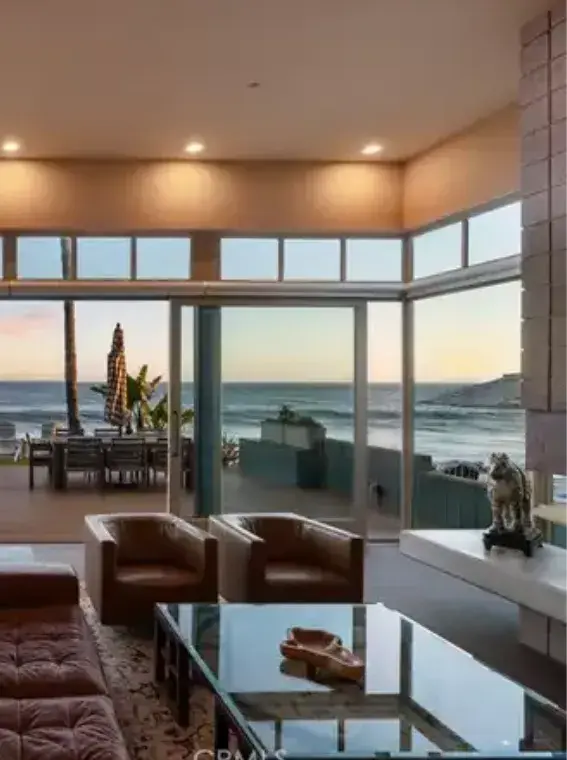
This is a real job. A homeowner in Sea Pointe Estates called after their previous window cleaning company had been servicing the property twice a year. Despite regular professional visits, the ocean-facing second-story glass had a permanent-looking white haze that never fully cleared. The views of Catalina Island from the living room — the main reason they bought the $3.2M property — were visibly degraded.
What we found
Two compounding problems. First, the previous company was cleaning with tap water — leaving mineral residue on the glass every time it dried. After three years of twice-yearly tap water cleaning visits, the compound mineral layer had built into calcium that felt rough to the touch on the ocean-facing panes. Second, the frames and sills hadn’t been thoroughly cleaned — salt deposits in the channels were draining back onto the glass between every visit.
What we did
TDS check first — our system reading sub-5 at the truck. Full deionized water scrub and rinse on all exterior glass, carbon fiber pole to the second story without touching the patio cover. Frames and sills detailed with lint-free cloths. The rougher calcium deposits on two lower-level panes needed a second pass with professional mineral deposit chemistry before the DI rinse.
The result
The Catalina Island view came back. The homeowner walked through the living room, stopped at the glass, and said nothing for about five seconds. That’s the best response you can get on a job site. They’re now on an 8-week recurring schedule — appropriate for that elevation and coastal exposure.
The lesson
Crystal clear glass on a Sea Pointe Estates ocean-view property isn’t a one-time event. It’s an 8-week maintained system using deionized water every visit, frames cleared every visit, and a stable interval matched to that specific coastal position.
The time it takes to move through these stages depends on position. A bluff-front home in Southwest San Clemente with no professional cleaning can reach Stage 3 within 18 months. An inland property in Talega without irrigation contact on the windows might take 4–5 years to reach Stage 2.
The Five Elements That Determine Glass Clarity on the California Coast
Water Quality
Nothing else works if the cleaning water is wrong. San Clemente’s tap water at 625 ppm deposits dissolved calcium and magnesium on glass every time it dries. A professional clean using tap water leaves more mineral residue on the glass than was there before the clean in many cases — the fresh salt is removed, the cleaning water’s minerals are left behind.
Sub-5 TDS deionized water eliminates the cleaning-water mineral contribution entirely. When DI water dries on glass, it leaves nothing. The only contamination accumulating after a DI clean is what the environment deposits — Pacific salt, irrigation calcium, canyon dust — not compounds from the cleaning water as well.
This is the single most impactful change a San Clemente homeowner can make when choosing a window cleaner: confirm that they check TDS before every job and that they’re actually producing sub-5 TDS water. Ask what their meter reads. If they don’t know what TDS is, find someone who does.
Frame and Channel Clearing
The glass pane is the visible part. The frame channels and sills are where contamination waits to re-soil the clean glass. Salt deposits in aluminum frame channels dissolve with morning marine layer moisture and drain down the channel onto the clean glass pane. Hard water calcium in the sill contacts the glass bottom edge with every irrigation splash. A window that was cleaned perfectly at 8 am can show frame drainage staining by the following morning if the channels weren’t cleared.
Professional cleaning that skips frame and channel clearing on exterior glass produces a clean that hazes back in days rather than weeks — not because the glass wasn’t cleaned, but because the contamination source in the frames wasn’t addressed. Every visit we do: every frame wiped, every channel cleared, every sill cleaned on every window. Not an option. Part of the standard process.
Right Interval for Your Position
Cleaning frequency is position-dependent in San Clemente. The same homeowner who needs a 6-week interval at a bluff-front position in Southwest San Clemente would be fine with a 12-week interval if they lived inland in Talega. Bluff-top and direct ocean-facing: 6–8 weeks. Near-coastal and ridgeline positions: 8–10 weeks. Inland HOA communities: 10–12 weeks. Vacation rentals in the Pier Bowl: 5–6 weeks during peak season.
The interval matters because of how contamination progresses through bonding stages. At the right interval, the contamination never advances past Stage 1 surface film on each visit — fully removable, no treatment needed. Stretch the interval too far, and Stage 2 bonding begins — the first clean after the extended gap takes longer and costs more. The maintained interval is the most cost-effective approach.
What’s Included on Every Visit
Crystal-clear glass requires more than the glass pane itself to be addressed. The complete visit includes: TDS check before starting; exterior glass top to bottom with DI water through the water-fed pole; every frame, channel, and sill cleared on every window; screens removed, assessed, and cleaned; interior glass with shoe covers, spray bottle only, microfiber detail; and a walk-through under raking light before payment.
Anything less — glass-only cleaning without frames, tap water without TDS verification, no screen assessment — produces shorter-lasting results and allows contamination sources to persist in the frame and channel system.
First Clean After a Gap
If the glass hasn’t had professional cleaning in 12+ months, or if the previous cleaner was using tap water, the first DI water visit will produce a significant visual improvement — but may not achieve full crystal clarity on every pane, especially lower-floor glass adjacent to irrigation zones.
Hard water spots that have bonded to the glass surface through repeated irrigation and sun exposure may need a second visit or a separate hard water spot removal treatment on the affected panes. We assess before starting and tell you what’s achievable on the first visit versus what requires treatment. After the first clean, maintained DI water cleaning at the right interval keeps the glass at Stage 1 contamination indefinitely — crystal clear on every subsequent visit.
The Talega Case Study — When HOA Notices Are the Wake-Up Call
A Talega homeowner received a written HOA notice citing ground-floor window appearance — specifically the white calcium spotting from irrigation overspray that was visible from the street. The sprinkler system had been hitting the lower half of every ground-floor window at pre-dawn irrigation runs for months.
When we assessed the glass: classic Stage 2–3 calcium on the six ground-floor windows; three panes had begun light surface etching from the mineral crust baking through months of direct Southern California sun. Not irreversible — but beyond what standard DI water cleaning alone would fully address.
We used professional-grade calcium treatment on the ground-floor glass, dwell time appropriate to the deposit age, then DI water rinse. The etching on the three worst panes responded to treatment, recovering about 90% of their original clarity. The upper-level windows — standard Talega foothills dust and moderate salt — responded to a standard DI water scrub and rinse on the first visit.
The homeowner sent photos to the HOA contact before the deadline. No further notice. They booked a 10-week recurring schedule — correctly timed for Talega’s microclimate, which is further from the coast but has active irrigation calcium as the primary contamination source.
The lesson: In Talega and Forster Ranch, crystal-clear glass is an irrigation management problem as much as a window cleaning problem. Regular DI water cleaning on a 10-week cycle prevents the Stage 2–3 bonding from developing. Waiting for the HOA notice means a more involved first visit.
What Helps Between Professional Visits
Professional DI water cleaning every 6–12 weeks depending on position. Between visits, homeowners can extend the clean with:
Weekly garden hose rinse on accessible ground-floor glass. Removes fresh Stage 1 salt film before it cycles through wet-dry baking sessions. Doesn’t eliminate accumulation — but slows the progression to Stage 2. The rinse water is San Clemente tap water at 625 ppm, which deposits its own minerals, but the net benefit of removing fresh salt outweighs the mineral deposit from rinsing.
Monthly vinegar clean on ground-floor accessible glass at Pier Bowl and North Beach positions where salt accumulation is fastest. Dissolve fresh salt with undiluted white vinegar, let it dwell five minutes, rinse with hose. Don’t wipe dry salt — wet the glass first before any contact.
Screen rinse after Santa Ana wind events. Screens trap silica dust and salt in the mesh fibers. A garden hose rinse of the screens after a significant Santa Ana event prevents the embedded dust from transferring to the glass during the next rain or marine layer event.
What doesn’t help: Windex, dish soap, or any product that leaves surfactant residue — these make the accumulation cycle faster, not slower, on San Clemente’s coastal glass.
The Complete Crystal Clear Checklist for San Clemente Coastal Homes
Professional cleaning:
- DI water at sub-5 TDS confirmed by TDS meter before every visit
- Exterior glass top to bottom, water-fed carbon fiber pole on upper floors
- Every frame wiped, every channel cleared, every sill cleaned
- Screens removed, assessed, cleaned, and reinstalled
- Interior glass with shoe covers, spray bottle only, lint-free corner detail
- Walk-through under raking light before payment
- Right interval for your position — 6 to 12 weeks depending on coastal exposure
Between professional visits:
- Weekly garden hose rinse on accessible ground-floor glass
- Monthly vinegar clean at beach-adjacent positions
- Screen rinse after Santa Ana events
- No soap, no Windex on exterior glass
One-time actions for properties with existing buildup:
- Professional assessment of calcium stage on all affected glass
- Hard water spot removal treatment where Stage 2–3 bonding is present
- Establish recurring DI water schedule from that point forward
According to the City of San Clemente’s Water Quality Report, the city’s water supply averages 625 ppm Total Dissolved Solids — more than five times the EPA’s “hard water” threshold. That single fact explains why the approach that produces crystal-clear glass in a soft-water coastal city doesn’t translate directly to San Clemente without deionized water as the cleaning medium.
Call (949) 408-1235 — crystal-clear coastal glass is not a product; it’s a system. We’ll set up the right system for your property.
What Crystal Clear Glass Actually Feels Like
Homeowners who make the switch from tap water cleaning to a DI water recurring schedule consistently describe the same things:
The glass looks different in low morning light — not just clean, but genuinely transparent in a way that earlier cleanings never produced. The views that were the reason they bought the home are unobstructed again. The June Gloom mornings that used to reveal new haze on the Pacific-facing glass show manageable fresh salt rather than compound mineral film.
And then the interval passes without the usual phone call to the cleaner because the glass is still holding. That’s the practical test of whether the system is right: the clean holds for most of the interval without urgent follow-up.
That’s crystal clear on a San Clemente coastal home. Not perfect glass every day — maintained, clear glass that does its job without requiring your constant attention.
Call (949) 408-1235 — one call sets up the right system for your specific position in San Clemente.