
How Often Should You Clean Windows in San Clemente?
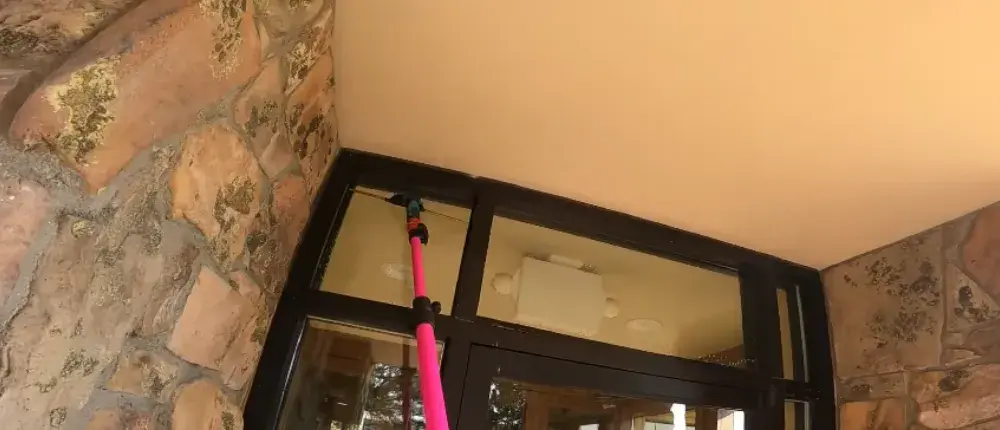
The short answer: more often than you think — and it depends on where in San Clemente you live.
Bluff-top homes in Sea Pointe Estates or Cyprus Shore need exterior cleaning every 6–8 weeks. Homes in Talega and Forster Ranch can stretch to 10–12 weeks. Vacation rentals in the Pier Bowl need cleaning before every turnover, or at minimum every 5–6 weeks during peak season.
The reason the answer varies so much by location: San Clemente has three separate glass contamination sources working simultaneously, and your position in the city determines which ones hit your glass hardest and how fast.
(949) 408-1235 — not sure which interval fits your home? Call us and describe your location. We’ll give you a straight answer.
Why San Clemente Glass Gets Dirty Faster Than Most Places
Before getting into specific intervals, it helps to understand what’s actually happening to your glass.
Salt Air
Sodium chloride particles from wave action travel inland and settle on exterior glass continuously. This isn’t a once-a-week event — it’s happening every day. On bluff-front properties above Salt Creek Beach or above Trestles, salt deposits on clean glass within 48–72 hours. The further inland you are, the slower the accumulation — but it never stops.
Hard Water
San Clemente tap water averages 625 parts per million of dissolved solids — in the “very hard” classification. Every morning, irrigation systems cycle pre-dawn and hit lower-floor windows. The water evaporates in the morning sun and leaves dissolved calcium behind. Week after week, the calcium layers build. This affects every neighborhood in the city, not just coastal properties.
The June Gloom
From late May through early July, the Pacific fog rolls in every morning, deposits a moisture film of dissolved salt and minerals on all exterior glass, and evaporates mid-morning in the sun. That evaporation leaves the mineral content behind on the glass surface. This cycle repeats daily for six weeks straight — no rain to rinse, no off-period. It’s the worst window contamination of the year in San Clemente, and it coincides with peak occupancy season for vacation rentals and the highest real estate showing season.
All three sources compound on each other. Salt air + marine layer moisture + irrigation calcium on the same glass is why San Clemente windows get dirty faster than comparable coastal cities without the hard water problem.
Cleaning Intervals by San Clemente Neighborhood
Here’s how to think about frequency based on where your home is:
Bluff-Top and Direct Ocean-Facing Properties
Who this is: Cyprus Shore, Cotton’s Point, The Breakers, La Ladera (Southwest San Clemente), Sea Pointe Estates, Ritz Cove-equivalent positions, bluff-front Pier Bowl properties.
These properties face the Pacific directly. Salt air doesn’t travel to reach your glass — it rises off the water below and lands on your windows. During June Gloom season, we’ve measured salt film visible within 48 hours on ocean-facing glass at Cyprus Shore. At this contamination rate, a 12-week interval means your windows spend most of their life looking hazy.
6–8 weeks is the realistic maintenance interval. Some Sea Pointe Estates properties with full western exposure during peak marine layer season drop to 5–6 weeks from May through July.
What you’re cleaning off each visit: Active salt film, marine layer mineral deposits, bird droppings from coastal species transiting the bluff edge, and any irrigation calcium on lower windows.
Near-Coastal Neighborhoods
Who this is: Marblehead ridgeline, North Beach corridor, downtown Pier Bowl residential, Central San Clemente west-facing homes, Downtown San Clemente.
Close enough to the coast to accumulate meaningful salt film, but not at the direct bluff-front rate. West-facing glass on Marblehead’s ridgeline sees the same Pacific salt as bluff properties — just slightly reduced by the distance and elevation angle. The June Gloom marine layer hits these properties hard.
8–10 weeks keeps the glass looking maintained. A 12-week stretch during June Gloom season will show visible haze by the time you get there.
Inland HOA Communities
Who this is: Talega, Forster Ranch, Rancho San Clemente, most of 92673.
Coastal salt exposure is lower here — these neighborhoods are sheltered from direct Pacific wind by the ridgeline. But hard water irrigation calcium is the dominant contamination source, and it doesn’t take a break. The Santa Margarita Water District water serving Talega and the City of San Clemente water in Forster Ranch both run at very hard levels. Irrigation calcium on lower-floor glass builds consistently regardless of season.
10–12 weeks works for most inland HOA properties, with a focused pre-inspection clean timed to spring (March) and fall (September) HOA inspection cycles. Talega’s HOA specifically includes window condition on their exterior inspection checklist — 10-week recurring visits prevent compliance notices far more effectively than waiting for the letter.
Santa Ana Season Exception
Regardless of neighborhood, if a significant Santa Ana event hits — and 2025 and 2026 have both had multiple significant events — dust from the inland canyon systems coats all exterior glass in San Clemente overnight. After a major Santa Ana event, even homes that were just cleaned three weeks prior need attention.
If you’re on a 10-week schedule and a significant Santa Ana happens two weeks in, call us. We schedule post-Santa Ana cleanings for accounts on our recurring plan. The silica and clay dust bonds faster than coastal salt when the sun hits it.
Vacation Rentals
Who this is: Pier Bowl STR properties, North Beach vacation rentals, Avenida Del Mar corridor units.
For vacation rental hosts, the cleaning interval isn’t driven by how the glass looks — it’s driven by the review cycle. One guest review mentioning hazy windows costs more in Airbnb algorithmic placement than a year of cleaning. On Pier Bowl properties within a block of the beach, salt accumulation during June Gloom season can visibly contaminate glass within 5–7 days. We run most STR accounts on 5–6 week exterior recurring during peak season (April through September) and 7–8 weeks over winter.
HOA-Governed Properties
For any home in a Talega, Forster Ranch, Marblehead, or Rancho San Clemente HOA community, the timing of your cleaning matters as much as the frequency. Spring HOA inspections typically run March–April. Fall inspections run September–October. A clean three weeks before the inspection cycle, rather than three weeks after, is the difference between a compliance notice and no notice at all.
Most HOA-governed inland properties run well on a 10–12 week recurring schedule with the visits positioned to arrive pre-inspection. That’s the setup we recommend for Talega and Forster Ranch homeowners who want to stay ahead of the board.
What Happens When You Wait Too Long
The consequence of stretching intervals isn’t just visual — it’s chemical. San Clemente’s combination of hard water irrigation calcium and Pacific salt air creates a compound mineral layer that builds over time.
Stage 1 — Surface film
0–3 months without cleaning. Salt film and fresh calcium deposits on the surface. Responds to standard exterior window cleaning on the first visit.
Stage 2 — Bonded mineral layer
3–12 months time period. Calcium has partially bonded to the glass surface through repeated deposition and sun exposure. Standard cleaning loosens most of it, but the first visit takes significantly longer, and some mineral shadowing may remain.
Stage 3 — Mineral etching
12+ months without professional cleaning. The calcium has chemically bonded with the silica in the glass surface. At this stage, hard water spot removal treatment is needed — a different process with different chemistry. Results depend on how deep the etching has gone.
Stage 4 — Irreversible damage
Advanced etching that has penetrated beyond the surface coating can’t be fully restored. Glass replacement is the only option.
The progression from Stage 1 to Stage 3 happens faster in San Clemente than in most California coastal cities because the hard water irrigation compounds with the coastal salt. Homes that go 18–24 months without professional cleaning regularly show Stage 3 or 4 damage on ground-floor windows near irrigation zones in Talega and Forster Ranch. Shorter intervals protect the glass, not just the view.
The Recurring Schedule Advantage
Most homeowners on a recurring schedule stop thinking about their windows. That’s the point.
We run 6-week, 8-week, 10-week, and 12-week recurring schedules depending on your neighborhood and exposure level. You set it up once — one call — and we handle the scheduling, show up on that interval, and send a text confirmation when we’re done. Maintained glass takes less time to clean than a glass building between infrequent visits, so recurring customers pay less per visit than one-time cleans.
For HOA accounts, we position the visits to arrive before inspection cycles. For STR hosts, we sync to booking calendar turnover gaps. For bluff-top homes, we adjust the interval upward during June Gloom and tighten it slightly over the quieter winter months.
The interval recommendation above is a starting point. After the first visit, we’ll tell you what the glass looked like when we arrived versus what we’d expect to see at the next visit, and we’ll refine the schedule from there.