
Is Professional Window Cleaning Worth It in San Clemente?
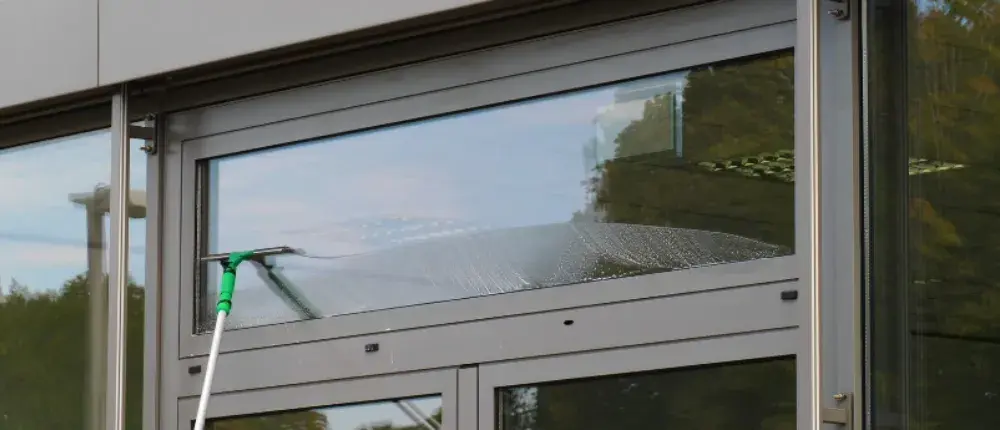
For most San Clemente homeowners: yes — and the argument isn’t about convenience. It’s about what happens to the glass when professional cleaning doesn’t happen regularly.
DIY window cleaning with San Clemente’s 625 ppm tap water deposits minerals on the glass every time you clean. Pacific salt air deposits daily on exterior glass regardless of what you do. The compound buildup over months and years moves through predictable damage stages — the last of which is irreversible glass etching that no cleaning reverses. Professional cleaning with deionized water, done at the right interval, breaks that cycle.
That said, “worth it” means different things for different San Clemente homeowners. Here’s the honest breakdown.
Call (949) 408-1235 — quotes in under 2 minutes.
The Glass Protection Argument
Most people think about window cleaning as a cosmetic service. It makes the glass look cleaner. That’s true, but it’s not the primary argument for professional window cleaning on coastal California property. San Clemente glass faces simultaneous contamination from two sources: Pacific salt air depositing daily sodium chloride aerosol on all exterior glass, and municipal hard water at 625 ppm depositing calcium and magnesium through irrigation systems every morning before sunrise. Both sources are permanent contributors — they don’t stop between cleaning visits.
The stage progression matters
At Stage 1, the contamination is a fresh surface film — fully removable on the first professional visit. At Stage 2, calcium has begun bonding to the glass surface through repeated deposition and sun exposure — still responsive to professional cleaning but requiring more time. At Stage 3, the calcium has chemically bonded with the silica in the glass — hard water spot removal treatment addresses this, with results depending on depth of bonding. At Stage 4, mineral etching has penetrated beyond the surface coating — this cannot be reversed, and glass replacement is the only option.
A single large replacement pane on a Marblehead ocean-view home runs $800–$3,000+. A custom glazing panel on a Sea Pointe Estates property can run significantly higher. A professional cleaning on a 10-week recurring schedule prevents Stage 3 and 4 from developing. The math isn’t close.
This argument applies most strongly to properties with direct coastal exposure — Southwest San Clemente, Sea Pointe Estates, Cyprus Shore, Cotton’s Point, bluff-top Marblehead. For inland properties like Talega and Forster Ranch, the coastal salt component is lower, but the hard water irrigation calcium still progresses through the same stages, just more slowly.
Call (949) 408-1235 — concerned about existing glass damage? We assess before we quote.
The DIY Limit in San Clemente Specifically
DIY window cleaning works fine in cities with soft municipal water, no direct salt air exposure, and single-story homes where all glass is accessible from the ground. San Clemente has none of those conditions for most properties.
The water problem
Cleaning with San Clemente’s 625 ppm tap water deposits a fresh mineral layer on the glass every time you rinse. The glass looks clean immediately after. Within 24–48 hours, the mineral residue is visible as a haze. DIY cleaning with tap water on coastal San Clemente glass doesn’t clean the glass — it deposits a fresh mineral layer in the same visit that removes the visible salt film. The underlying mineral compound continues building.
The only DIY approach that doesn’t make this worse is using purchased deionized or RO-filtered water for the final rinse. That’s an extra cost and extra step that professional cleaning already includes as standard.
The access problem
Most San Clemente two-story homes have upper-floor exterior glass above aluminum patio covers, clay tile rooflines, or both. Walking on an aluminum patio cover dents it and can crack the support joints — the repair is more expensive than years of window cleaning. Leaning a ladder against a tile roof risks cracking the tile and voiding the roofing warranty. The professional solution — a water-fed carbon fiber pole from the ground — isn’t DIY equipment. It costs several thousand dollars and requires technique that takes time to develop.
The salt air cycle problem
Even perfect DIY cleaning technique with the right water still can’t address frame channels and sills as efficiently as professional equipment. The salt air deposits that build in frame channels drain back onto clean glass within 24 hours of cleaning if the channels aren’t cleared. Professional cleaning includes frame and channel clearing on every window — DIY cleaning typically doesn’t. For a single-story home with easily accessible ground-floor windows, a garden hose rinse between professional visits slows accumulation. It’s a useful supplement, not a replacement.
Who It’s Most Worth It For
Ocean-View and Bluff-Top Homeowners
You bought the view. Salt air from the Pacific deposits on the glass that frames that view within 48–72 hours of a professional clean at bluff-front positions. On a 6–8 week professional schedule using deionized water, the glass stays genuinely clear for most of the interval. Without it, the view you paid for is behind a salt haze for most of the year.
The case study that comes up regularly: a Sea Pointe Estates homeowner with Catalina Island views called after their previous window cleaner had serviced the property twice a year with tap water. Despite regular cleans, the ocean-facing second-story glass had permanent-looking white haze that never cleared. Two years of tap water cleaning had allowed Stage 3 calcium bonding to develop on the glass. The view they paid for had been degraded by the cleaning approach meant to protect it.
HOA-Governed Communities
In Talega and Forster Ranch, window condition is included in HOA exterior inspection criteria. A compliance notice requires action within 30 days. A professional recurring HOA window cleaning schedule timed to arrive two to three weeks before each inspection cycle prevents the notice from ever arriving. The cost of the recurring schedule is considerably less than the stress, urgency, and potential fine of a compliance violation. It’s also considerably less than the emergency scheduling premium when the notice arrives, and you need to get on someone’s calendar in three days.
Vacation Rental Hosts
In San Clemente’s short-term rental market, one guest review mentioning hazy or dirty windows costs more in lost bookings and algorithmic placement than a full year of professional cleaning. The Pier Bowl and North Beach STR zones sit close enough to the ocean that salt accumulation on exterior glass during June Gloom season — late May through early July, peak booking season — can be visible in listing photos and from inside the unit within days of the last clean. A vacation rental window cleaning schedule synced to the booking calendar prevents that. The ROI math is direct: one avoided 4-star review that would have cost you $200–$400 in lost bookings covers multiple cleaning visits.
Pre-Listing Home Sellers
Crystal clear windows are the highest-ROI pre-listing improvement for homes in the $1.5M–$3M+ San Clemente market. MLS listing photos with clean, clear glass photograph dramatically better than hazy salt-film glass — and San Clemente’s median market means buyers walking through a $2M home notice dirty windows immediately. A professional cleaning the day before the photographer arrives is a minimal expense on a transaction where presentation directly influences offers received.
Who Has a Stronger Case for DIY
Single-story inland homes with modest window counts. A single-story 3-bedroom in Rancho San Clemente or the Central San Clemente hillside neighborhoods with 14–16 windows, all ground-floor accessible, and no direct coastal exposure has a reasonable DIY case. The glass is still subject to hard water irrigation calcium, but the accumulation rate is slower, and the access is manageable.
Homeowners who supplement professionally. The most efficient approach for many San Clemente homeowners: professional cleaning 2–4 times per year at the right interval, with garden hose rinses between visits to slow salt accumulation. The professional visits address the frame channels and deep mineral buildup. The DIY rinses extend the clean. This isn’t either/or.
According to ConsumerAffairs, homeowners in coastal markets consistently cite the difficulty of achieving streak-free results and proper upper-floor access as the primary reasons for choosing professional service over DIY. Both limitations are particularly pronounced in San Clemente.
The Recurring Schedule vs One-Time Clean Question
One-time professional cleaning is better than no professional cleaning. But the worth-it argument is strongest for recurring service because of how coastal glass contamination works.
A single professional visit removes what’s there. Within weeks, Pacific salt air and hard water irrigation calcium have built the contamination back. Without a recurring schedule, the glass is fully clean for three weeks and progressively hazy for the remaining nine weeks until the next one-time clean. With a 10-week recurring schedule, the glass is maintained at the first or second stage of contamination on every visit — never getting deep enough into compound mineral buildup to require extended first-visit cleaning time.
The per-visit cost of a maintained account is also lower than the per-visit cost of one-time cleans with extended gaps, because maintained glass cleans faster than glass that has been accumulating for months. One call sets it up. You don’t manage the schedule. We show up on the interval, clean the glass, and leave.
Call (949) 408-1235 — tell us your address and coastal exposure, and we’ll give you the honest assessment.